
Data Warehousing Consulting
Scalable Data Architectures for Dependable Decision-Making
The Information Lab designs, modernises and implements Data Warehouse architectures for reporting, analytics and AI applications. Whether engineering a greenfield platform, refactoring a legacy system, or expanding an established data stack, we design architectures tailored precisely to your operational requirements, governance mandates and strategic roadmap. The resulting data foundation remains performant, transparent and scalable over the long term.
Accelerating Value with
a Resilient Data Warehouse
As analytical demands evolve, a modern Data Warehouse provides the foundation for growth and rapid decision-making. By consolidating data streams into a unified architecture, organizations replace manual workarounds with automated, scalable workflows. Fast query performance, flexible data structures, and complete system transparency enable teams to operate? without operational bottlenecks.
A resilient Data Warehouse brings structural clarity to your entire data ecosystem. It consolidates disparate data assets, establishes clear asset ownership, streamlines the integration of new source systems, and maintains optimal performance at scale. This equips executives and business units with a reliable Single Source of Truth (SSOT), ensuring all dashboards, visual analytics, and operational decisions rest on a dependable foundation.

Your DWH Project with The Information Lab
The Information Lab engineers Data Warehouse solutions driven by end-user focused adoption and operational usage. Effective data architecture considers not only how data is stored, but how it is queried, modeled and applied in daily business operations.
Our deep delivery background across Business Intelligence, analytics, data engineering and dashboard projects directly shapes our architectural design. We build data models that reflect real-world business logic, optimise query performance, and serve analysts, department leads and executive management dependably.
We support greenfield Data Warehouse implementations as well as the modernisation of legacy platforms, covering architecture selection, dimensional data modeling, ELT/ETL pipeline engineering, quality assurance, documentation and seamless integration with downstream BI platforms.
What a Data
Warehouse Must Deliver
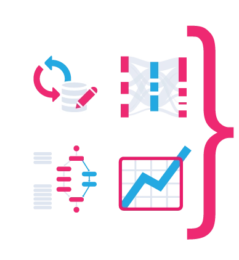
- Dependable Data Foundation
Daten aus unterschiedlichen Quellen werden strukturiert integriert, bereinigt und für Analysen konsistent bereitgestellt. - Scalable Platform Architecture
Expands effortlessly alongside new data sources, rising data volumes, emerging AI use cases and concurrent query demands. - Traceable Data Transformations
Documents, versions, and structures data transformation logic (ELT) so that schema changes and calculations are transparent and controlled. - Performance & Cost Management
Optimises data modeling, indexing and query execution to maintain fast response times while managing compute costs efficiently. - Seamless BI & Analytics Connectivity
Formats data models so that interactive dashboards, executive reports, and self-service analytics engines operate with high performance.
Our Expertise: Implementation, Modernization & Expansion
Data warehouse projects begin at different stages. Whether you are building a modern architecture from scratch, stabilizing legacy systems, or expanding an established data platform—we tailor our approach to your specific starting point.

Technology
Stack Aligned with Your Architecture
Selecting the right data warehousing technology depends on your scaling needs, performance targets, security requirements, regulatory compliance and budget framework. Consequently, our engagements begin with an evaluation of your functional and technical requirements rather than a rigid vendor commitment.
Cloud-native platforms like Snowflake or Databricks are ideal for scalable architectures, modern analytics workloads and elastic compute management. For data transformation and analytics engineering, we leverage dbt to ensure version-controlled, testable pipeline development.
Simultaneously, on-premise or legacy enterprise systems remain viable options for specific environments. Across highly regulated sectors, financial institutions and healthcare organisations, platforms like Oracle or Microsoft SQL Server frequently remain the optimal foundation.






Implementation Framework

Assess Status Quo
We analyse source systems, legacy databases, reporting requirements, query performance bottlenecks and business use cases to define explicit architecture goals.
Design Target Architecture
Based on functional and technical needs, we design a target blueprint covering data flows, dimensional modeling, transformation logic, governance rules and BI connectivity.
Implement Data Models & Pipelines
We build data models and automated ELT/ETL pipelines engineered for high query performance and full data lineage.
Ensure Quality & Maintainability
Automated testing protocols, version control (git) and comprehensive documentation guarantee long-term system stability and maintainability.
Enable BI & Executive Analytics
We structure access layers so that business analysts, department heads and executive leadership can query data intuitively through interactive dashboards.

Data Warehousing as the Foundation
A Data Warehouse serves as the core operational foundation for organisational analytics. Executive dashboards, self-service BI, predictive forecasting, workflow automation and agentic AI applications require an underlying data layer that is consistent, traceable and scalable.
The better data is structured, transformed and delivered at the warehouse level, the easier it becomes for internal business units to generate value from it, turning your Data Warehouse into a driver for faster decision-making and sustainable data products.
Project Delivery via
Managed Data Teams
When internal engineering teams require extra delivery capacity or specialised technical knowledge, our Managed Data Teams support the implementation, refactoring and expansion of your Data Warehouse architecture. Our teams connect source systems, design dimensional data models, engineer ELT pipelines and integrate automated quality testing by accelerating your data warehouse initiatives without requiring full operational outsourcing.




Trust Through Experience & Partnerships
The Information Lab brings extensive project experience across data engineering, BI, visual analytics and cloud architectures for clients of varying digital maturity. Our engineers and consultants hold certified expertise across market-leading platforms, including Snowflake, dbt, Databricks, Microsoft SQL Server and Oracle.
As an official partner of Snowflake and dbt, we deliver deep expertise in modern cloud data platforms and analytics engineering methodologies. Furthermore, our ISO 27001 certification guarantees information security, audited operational processes, and strict data protection compliance. Independent client reviews on ProvenExpert confirm our execution quality, where over 900 testimonials maintain an average rating of 4.8 out of 5 stars.
Training & Webinare
A Data Warehouse remains sustainable over the long term only when internal engineering teams understand how data modeling, transformation logic, quality testing, and BI connectivity interact. Our practical training formats equip internal teams with the skills required to maintain and expand modern Data Warehouse structures independently.
Insights
Knowledge Shared by Our Team
Next Step Toward a Resilient Data Warehouse
Whether building a new Data Warehouse, modernising legacy database systems, or expanding an established data platform, an initial architecture review will identify operational bottlenecks, evaluate technology options and outline a pragmatic implementation roadmap.

Benjamin Gretsch
Lead Data Engineer
Startseite- & Serviceskontakformular ENG
"*" indicates required fields
Weitere Fragen & Antworten
When does implementing a central Data Warehouse make commercial sense?
A central Data Warehouse (DWH) becomes business-critical as soon as business departments spend more time manually consolidating spreadsheets than performing actual data analysis. When reporting requirements grow, database queries stall and different departments present conflicting performance figures, a Data Warehouse establishes the necessary Single Source of Truth (SSOT) for dependable decision-making.
Must a historically grown, legacy data architecture be rebuilt from scratch?
No. A complete greenfield rebuild is rarely mandatory. The Information Lab frequently employs targeted system refactoring—auditing existing database architectures to isolate performance bottlenecks in data models or SQL queries. By refactoring legacy structures, we restore system maintainability and query performance while protecting your existing IT investments.
Are cloud Data Warehouses suitable for heavily regulated industries?
Cloud-native platforms like Snowflake or Databricks offer immense scalability advantages. However, heavily regulated organisations in financial services, pharmaceuticals, or healthcare must adhere to strict compliance policies. The Information Lab provides tool-agnostic advisory: where cloud deployment is restricted, we design and implement high-performance on-premise or private cloud architectures using platforms like Oracle or Microsoft SQL Server.
What advantage does your BI and frontend expertise bring to Data Warehouse engineering?
Many traditional backend providers build database architectures that store data securely, but in rigid schemas that are difficult for business analysts to query efficiently. The Information Lab engineers Data Warehouses strictly with the end user in mind. Data models are structured from outset so that visual analytics platforms like Tableau or Microsoft Power BI can process and render queries rapidly.
How is information security guaranteed within the data warehouse architecture?
Consolidating organisational data into a central repository requires uncompromised security protocols. From our headquarters in Hamburg, The Information Lab designs data architectures for mid-market companies and corporate groups across Germany, Austria and Switzerland (DACH). As an ISO 27001 certified partner, we implement role-based access controls, data encryption and governance frameworks that meet strict international security standards.
How long does a typical Data Warehouse implementation project take?
Rather than embarking on multi-year IT initiatives, The Information Lab uses an agile, iterative implementation methodology. We first define the target architecture blueprint, then prioritise high-impact operational use cases (such as financial controlling) and convert them into functional data models. This allows business departments to experience tangible reporting performance improvements within weeks while the Data Warehouse scales continuously in the background.
